
[Video] Deran Young on Legacy Burdens, Collective Trauma, and Self-Compassion
As I know so many in our community are exploring ways to support their clients in dealing with issues that are beyond individual pathology — such as inherited patterns, cultural conditioning, and collective wounds — I’m glad to share this video from Deran Young, LCSW, who integrates Internal Family Systems (IFS) with systems thinking to address intergenerational trauma and systemic oppression.
In this free 5-minute video, Deran introduces the concept of legacy burdens — the beliefs, emotional patterns, and cultural conditioning passed down through families and society — and reflects on what it means to begin unlearning them.
Drawing on her own experience as a Black woman and military veteran, she explores how these burdens become so normalized they can be invisible, “like the water that we swim in.” She also shares why self-compassion is such an essential starting point for this process, and why unlearning can feel even more vulnerable than learning something new.
On-Demand Workshop with Deran Young!
We’re so glad to share this 90-minute workshop with Deran Young — Beyond Individual Pathology: An IFS Approach to Legacy Burdens and Systemic Trauma. Learn more and register here >>
On-Demand Workshop with Deran Young!
We’re thrilled to share this 90-minute on-demand workshop with Deran Young, LCSW — Beyond Individual Pathology: An IFS Approach to Legacy Burdens and Systemic Trauma.
In this workshop, Deran integrates IFS with systems thinking to explore how intergenerational trauma, cultural conditioning, and social constructs shape identity, protective patterns, and relational dynamics — and offers practical, clinically grounded ways to recognize and work with legacy burdens as they emerge in the therapy room.
In this workshop you will:
- Define and apply core IFS concepts — including legacy burdens, Self energy, unblending, and unburdening — within a clinical context
- Identify how legacy burdens may present in clients’ symptoms, narratives, and protective strategies
- Apply systems thinking to recognize patterns of polarization within individuals, families, and broader relational systems
- Utilize practical interventions such as compassionate witnessing, the “YOU-turn,” and corrective emotional experiences
- Engage in experiential, parts-based practices to deepen your own self-awareness and support more attuned clinical work
Also included with registration:
- Lifetime access to the workshop recording and typed transcript
- 1.5 CE credits available for purchase
Learn more and register for the On-Demand Workshop >>
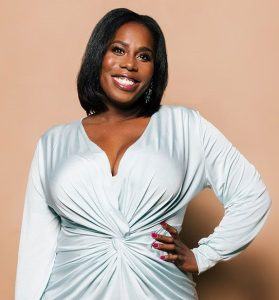
Deran Young, LCSW, MSW, MPA is a licensed clinical social worker, retired U.S. Air Force officer, and founder of Black Therapists Rock, a nonprofit organization mobilizing more than 30,000 mental health professionals committed to reducing the psychological impact of systemic oppression and intergenerational trauma. With a foundation in clinical social work and public administration, Deran brings a unique blend of therapeutic insight, organizational leadership, and systems-level thinking to her work in mental health equity.
Deran earned her Master of Social Work from the University of Texas at Austin, where she also studied abroad in Ghana, West Africa, helping to establish a counseling center for under-resourced high school students. Her clinical experience spans four continents and includes work with individuals, couples, families, and communities impacted by trauma, displacement, and chronic stress. Through Black Therapists Rock and her consulting practice, she partners with organizations such as the Brené Brown Education & Research Group, Facebook, LinkedIn, Field Trip Health, Internal Family Systems Institute and the YWCA to advance culturally responsive, trauma-informed approaches to care. Deran is a co-author of the New York Times bestseller You Are Your Best Thing and is a nationally recognized speaker and educator on racial trauma, belonging, and collective healing.
Leave A Comment